Why a Warm-Up Has Its Own Pace
Warm-up pace should match the session ahead. Learn how to choose a sensible opening for a walk, run, weights session or class without overcomplicating it.

The common warm-up mistake is treating it as a miniature version of the workout: hurried movements, then straight into the demanding part. That costs you the chance to notice how the movement feels before effort rises. A warm-up works better as a change of gear, not a compressed rehearsal.
Warm-up pace is the main question. It should reflect what you are about to do, where you are doing it and how you feel at the start. A gentle walk does not need the same preparation as a weights session or a game with quick turns.
What does warm-up pace mean?
It is how gradually you move from rest towards the activity’s demands, not a fixed duration or a target level of exertion. Begin with movement that feels easy to control. Then make it more like the session, while keeping enough room to adjust.
For a walk, that might mean an easy opening stretch before a brisker pace. For swimming, it could be relaxed strokes before the planned effort. For weights, it may mean practising the movement with little or no load before using the load intended for the session.
A warm-up is not a promise about performance or injury prevention. Its modest purpose is to make the change from stillness to exercise more considered. It cannot cancel pain, poor sleep or a workload that is not right for you.
How should warm-up pace differ by activity?
For a walk or run
On an easy walk, the opening can simply be an easy walk. Let the pace rise if it feels comfortable. Adding a separate circuit of lunges before a relaxed stroll may be more ceremony than the outing requires.
For a run, begin with an easy walk or jog and move towards the planned effort as it feels manageable. If the route includes hills or uneven ground, keep the first part on gentler terrain where possible. Relaxed marching or controlled leg swings can be added if they feel useful; forcing a stretch is not required.
For weights
Start with comfortable general movement, then practise the exercise you plan to do. Before squats, for instance, a few easy body-weight repetitions may help you settle into the pattern. Before upper-body work, uncomplicated arm and shoulder movements may be more relevant.
If you use weights, begin the exercise with a load and movement you can manage, then adjust according to how it feels. Do not copy another person’s demanding opening set merely because it is written into their routine. For injury, persistent pain or a health condition affecting exercise, seek advice from a qualified health professional.
For games and classes
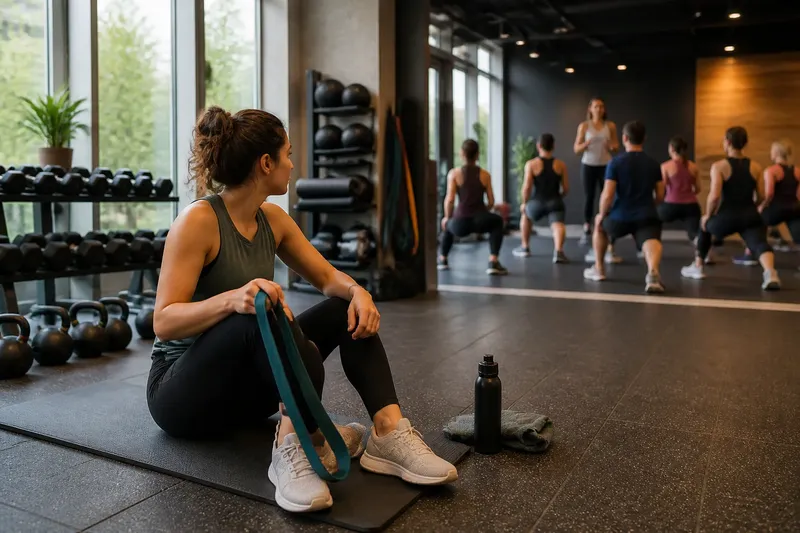
A casual game may involve turning, shuffling or passing. Start with easy movement and bring in those actions gently. In a dance or group class, follow the instructor’s opening at a comfortable level; smaller movements are a sensible option while you settle in.
If you arrive late, do not sprint through improvised preparation to catch up. Join at a manageable point and tell the instructor if that would help. The class will survive the absence of a dramatic entrance.
What should change with the place and conditions?
Outdoors, a wet path, poor light or strong wind may call for an easier opening or a different route. Choose a clear area if you add movements such as marching or leg swings. Wear clothing that lets you move comfortably.
In a busy gym, use the space without turning a corner into a private studio. An easy spell on a treadmill or stationary bike, or a few simple movements beside your station, may suit. At a pool, follow the facility’s rules and begin with easy swimming if it fits your session.
At home, walking around the room or gently marching on the spot may be enough. Equipment is not needed unless the activity itself calls for it. The useful adjustment is often to make the opening simpler, not to add more props.
What should you do if you feel stiff or rushed?
After a long spell sitting, start with low-effort movement you can control. Notice whether stiffness eases as you move. Sharp, worsening or unusual pain is different: stop rather than trying to warm through it.
If time is short, reduce the session’s ambition instead of cramming a full routine into a frantic minute. Choose an easier version of the activity or postpone demanding work. Stop and seek appropriate medical advice for concerning symptoms such as dizziness, chest discomfort or significant pain.
Say you have just left a desk and plan to cycle a familiar route. You take the bicycle to a quiet place, ride easily on level ground, then decide whether to pick up the pace. If the road is busy or the weather feels uncomfortable, you keep the ride easy or wait. The decision comes from what you observe, not from completing a prescribed sequence.
What questions help you set warm-up pace?
Does every session need a separate warm-up routine?
No. An easy walk can begin gently and build as it goes, while a technical or demanding session may need more deliberate preparation. Let the activity and your starting point determine whether you add anything separate.
Should a warm-up make you tired?
No. You should be ready to begin, not depleted. If you are breathing hard or your muscles feel spent, lower the effort or simplify the movements.
Can stretching be the whole warm-up?
Comfortable movement through a useful range can be part of an opening. A long, forceful stretch is not a universal substitute for gradually approaching the activity itself.
When should you stop warming up?
Stop if movement brings sharp pain, faintness, chest discomfort, unusual shortness of breath or symptoms that concern you. Seek qualified medical guidance where needed; a warm-up cannot diagnose a health problem.
How can you tell when to begin the main session?
Look for a practical transition rather than a dramatic sensation. You have moved from rest towards the kind of movement the session requires, and the effort is rising in a controlled way. You are not forcing a painful or unfamiliar motion.
Warm-up pace is a useful search phrase because it points to the real decision: how to begin this activity, in this place, today. A walk may need little more than an easy start; a more demanding session may call for a slower approach. Keep the opening proportionate, and change course if your body or surroundings give you a reason.